 11
11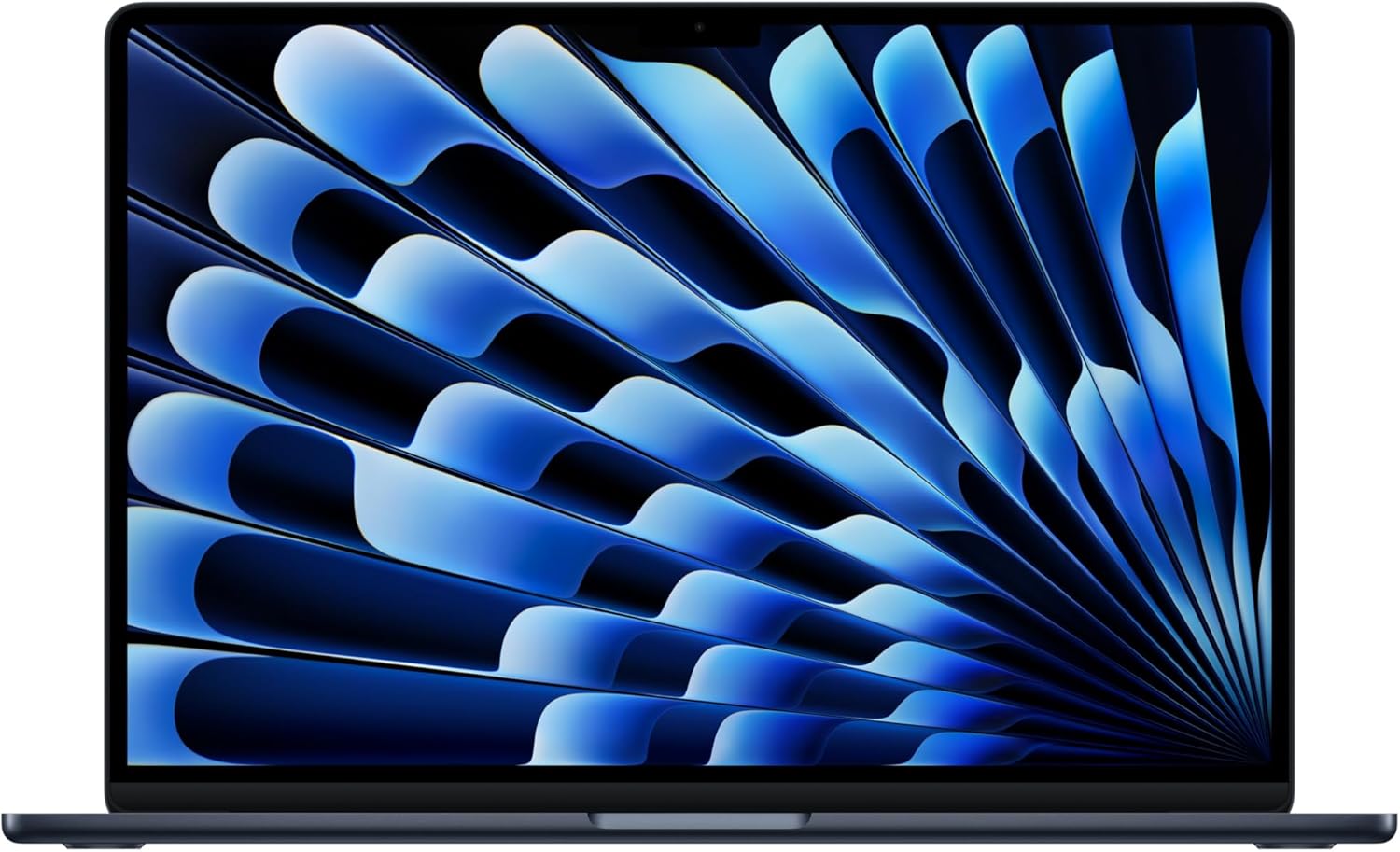
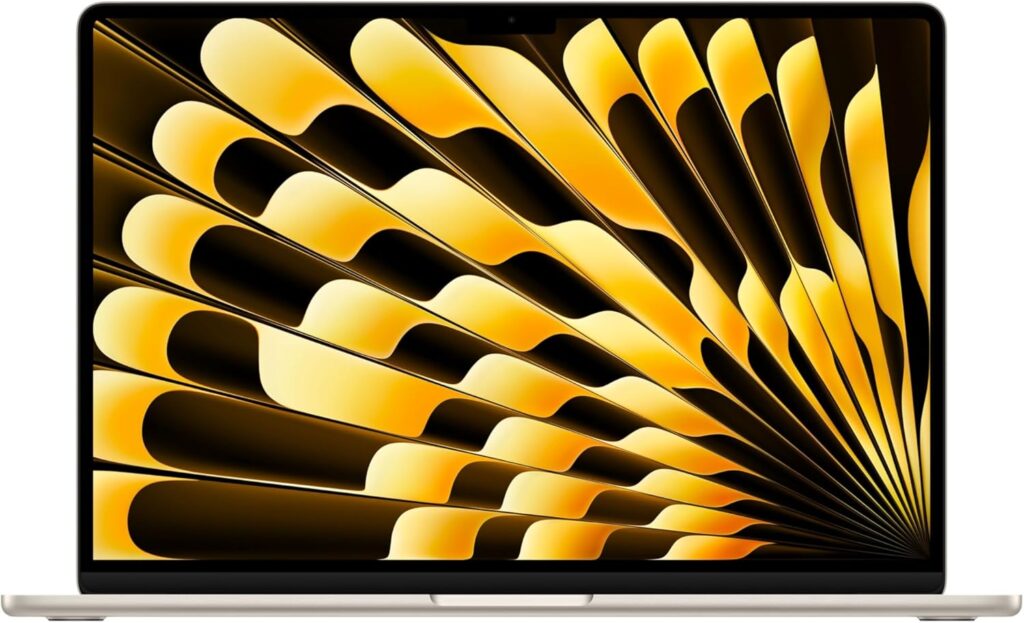
The 2026 generation of the MacBook Air introduces a refined balance of portability, performance, battery efficiency, and AI-focused computing. The new 15-inch MacBook Air powered by Apple’s M5 chip continues the evolution of Apple Silicon while maintaining the lightweight and fanless design that has defined the MacBook Air lineup in recent years.
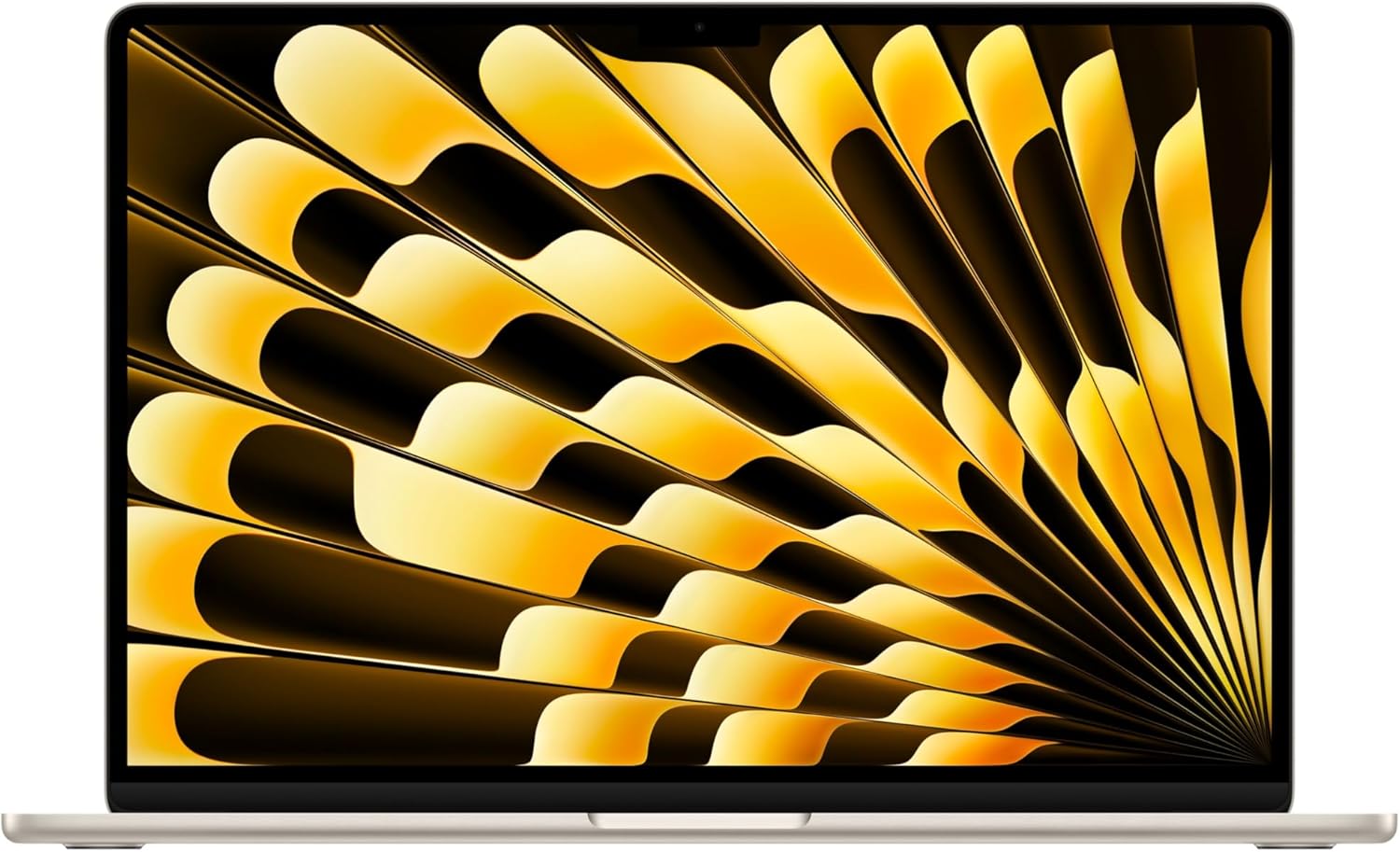
This configuration features a 15.3-inch Liquid Retina display, 16GB unified memory, 512GB SSD storage, a 12MP Center Stage camera, Wi-Fi 7 connectivity, Touch ID security, and Apple’s Midnight finish. According to official technical specifications, the M5 version also introduces enhanced neural processing, upgraded wireless performance, and improved memory bandwidth for demanding modern workflows.
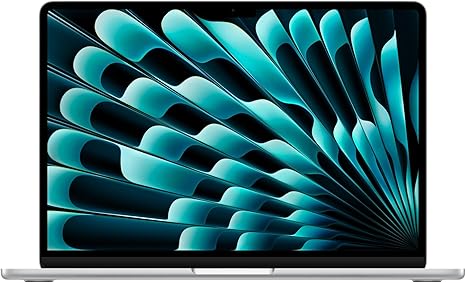
The 2026 MacBook Air 15-inch maintains Apple’s ultra-thin aluminum chassis while offering a larger display area compared with the 13-inch model. Despite the larger footprint, the laptop remains lightweight and highly portable for users who need a bigger screen without moving into the heavier MacBook Pro category.
Apple continues using a unibody aluminum enclosure that provides rigidity and durability while preserving the minimalist aesthetic associated with the MacBook family. The Midnight color option gives the device a darker premium appearance with a modern finish that stands out from the traditional silver variants.
The laptop is fanless, meaning it operates silently during everyday tasks such as browsing, productivity work, media consumption, coding, and video conferencing. The absence of cooling fans also contributes to its slim profile.
According to technical data, the 15-inch model weighs approximately 1.51 kg (3.3 pounds), making it relatively light for a large-screen laptop.
At the center of this MacBook Air is the Apple M5 chip, Apple’s next-generation processor designed for performance efficiency and AI-accelerated workflows.
The M5 chip includes:
Apple positions the M5 architecture as an important step toward on-device artificial intelligence processing. Instead of relying entirely on cloud computing, the Neural Engine can accelerate machine learning tasks directly on the device.
This approach supports features such as:
Because AI workloads increasingly require fast memory access and specialized neural hardware, the M5 chip’s expanded bandwidth and Neural Engine are designed to improve responsiveness in modern software environments.
Reports covering the M5 launch indicate performance improvements over previous Apple Silicon generations, especially in multitasking and creative workflows.
This MacBook Air configuration includes 16GB of unified memory.
Unlike traditional laptops where RAM and graphics memory are separated, Apple’s unified memory architecture allows the CPU, GPU, and Neural Engine to access the same memory pool simultaneously. This can improve efficiency and reduce latency during multitasking or media workloads.
The 16GB memory configuration is designed for users handling:
The unified memory architecture also contributes to power efficiency because data does not need to be duplicated across separate memory systems.
Apple states that the MacBook Air M5 can be configured with up to 32GB unified memory for more demanding professional use cases.
The laptop includes a 512GB solid-state drive as standard storage.
Compared with earlier base models that started with smaller storage capacities, Apple increased the baseline storage in the M5 generation. Reports covering the launch note that the SSD subsystem also benefits from faster read and write speeds.
A 512GB SSD provides space for:
Solid-state storage also improves:
Apple offers optional configurations with up to 4TB storage capacity for users with larger workflow requirements.
One of the defining features of this MacBook Air is its 15.3-inch Liquid Retina display.
According to Apple specifications, the display offers:
The larger display size benefits users who multitask frequently or work with creative applications. Additional screen space improves workflow efficiency when managing multiple windows, editing timelines, or viewing large spreadsheets and documents.
Wide color support enhances photo and video accuracy, while True Tone adjusts color temperature automatically based on ambient lighting conditions.
The Liquid Retina panel is also designed to deliver sharp text rendering and detailed visuals for productivity and entertainment.
The integrated 10-core GPU in the M5 chip is built for both efficiency and graphical performance.
The GPU supports:
These media engines improve performance in video editing, content streaming, rendering, and media playback.
The inclusion of AV1 decode support is particularly important for modern streaming services because AV1 is increasingly used for efficient high-quality video delivery.
Hardware acceleration also helps reduce power consumption during media playback and creative workflows.
Although the MacBook Air is not positioned as a dedicated gaming laptop, the M5 GPU can handle many modern games and creative applications efficiently, especially software optimized for Apple Silicon.
Battery life remains one of the strongest aspects of the MacBook Air lineup.
Apple estimates:
The efficiency of Apple Silicon contributes significantly to battery longevity because the chip dynamically manages power allocation between performance and efficiency cores.
The laptop uses a 66.5-watt-hour lithium-polymer battery and supports:
The combination of long battery life and fanless operation makes the MacBook Air particularly suitable for travel, remote work, and mobile productivity.
A major update in the 2026 MacBook Air is the introduction of Wi-Fi 7 support.
Apple includes its new N1 wireless networking chip with support for:
Wi-Fi 7 improves wireless throughput, lower latency, and network responsiveness compared with previous standards. This can benefit:
Bluetooth 6 also improves compatibility with wireless peripherals, including headphones, keyboards, and accessories.
Video communication continues to play a major role in modern computing, and Apple upgraded the MacBook Air with a 12MP Center Stage camera.
Features include:
Center Stage automatically adjusts framing to keep users centered during video calls, which can improve presentation quality during meetings or online collaboration.
Desk View allows simultaneous overhead desk presentation alongside the main camera feed, useful for demonstrations, tutorials, or collaborative work.
The improved image signal processor in the M5 system also enhances image clarity and low-light performance.
The MacBook Air 15-inch includes a six-speaker sound system with force-cancelling woofers.
Additional audio features include:
The larger chassis of the 15-inch model allows improved speaker separation compared with smaller laptops, contributing to fuller sound reproduction for movies, music, and calls.
Voice Isolation helps reduce background noise during meetings and online communication.
Apple continues using the Magic Keyboard with a large Force Touch trackpad.
The keyboard is designed for:
Touch ID provides biometric authentication for:
The large trackpad remains one of the defining features of the MacBook experience, supporting precise gesture controls and smooth navigation across macOS.
The MacBook Air includes:
Thunderbolt 4 supports:
Although the port selection remains minimal compared with larger professional laptops, Thunderbolt connectivity offers substantial flexibility through adapters and hubs.
The MacBook Air operates within Apple’s macOS ecosystem, which integrates closely with:
Features such as AirDrop, Universal Clipboard, Handoff, and iPhone Mirroring help create seamless workflow continuity across Apple devices.
Apple Silicon optimization also enables strong app efficiency and improved battery management compared with traditional x86 laptops.
Apple continues emphasizing environmental initiatives in its hardware production.
Reports covering the M5 MacBook Air mention expanded use of recycled materials in the chassis and internal components.
The energy efficiency of Apple Silicon also contributes to reduced overall power consumption during long-term use.
The 2026 MacBook Air 15-inch is positioned for users who want:
Its combination of portability and screen size makes it suitable for students, remote workers, creators, developers, professionals, and general productivity users.
The fanless architecture also appeals to users who prioritize silent computing environments.
The Apple 2026 MacBook Air 15-inch with the M5 chip represents a continuation of Apple’s strategy to blend performance, efficiency, portability, and AI-focused computing into a lightweight laptop platform.
With a 15.3-inch Liquid Retina display, 16GB unified memory, 512GB SSD storage, Wi-Fi 7 support, a 12MP Center Stage camera, and advanced Apple Silicon architecture, the device is designed to handle modern workflows while maintaining the thin and quiet MacBook Air identity.
The addition of AI-oriented processing capabilities through the Neural Engine and Neural Accelerators highlights Apple’s increasing focus on local machine learning performance and intelligent computing experiences.
For users exploring large-screen ultraportable laptops, the M5 MacBook Air introduces updated connectivity, improved efficiency, enhanced media support, and next-generation Apple Silicon performance in a refined portable form factor.